
Menu Engineering for UAE Restaurants: Using POS Data to Price and Place Every Dish
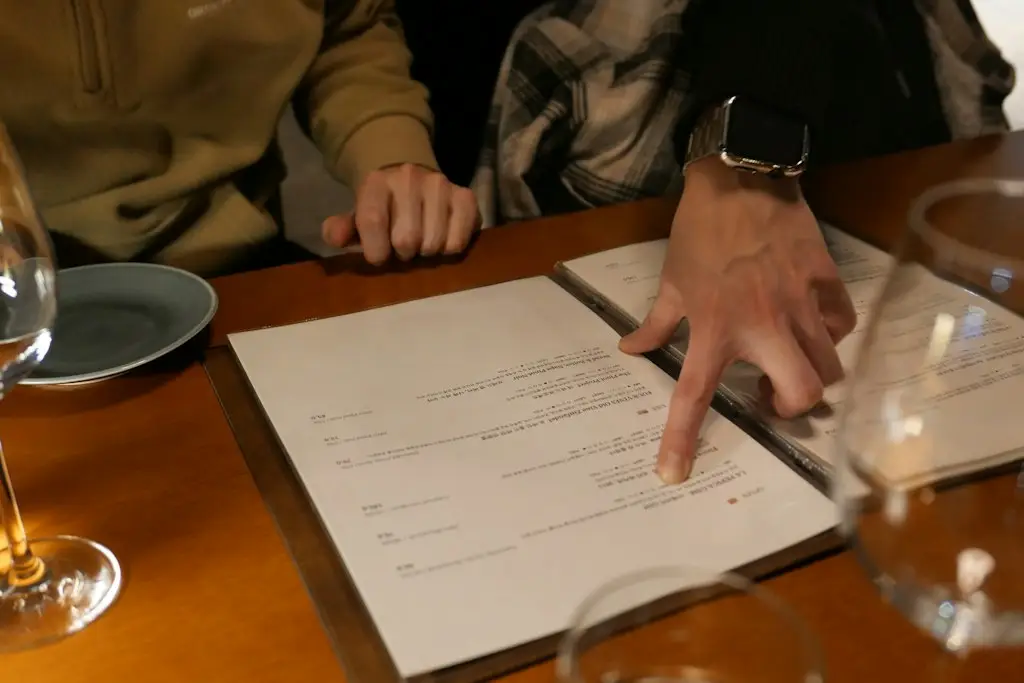
Most restaurant owners in the UAE can name their best-selling dish without thinking. Far fewer can name their most profitable one, and the two are rarely the same plate. That gap is where a surprising amount of margin disappears, quietly, one order at a time.
Restaurant menu engineering is the discipline that closes it. It is not about redesigning your menu to look nicer or adding trendy dishes. It is a structured way of reading your own sales data so that every item on the menu earns its place, is priced correctly, and sits where guests are most likely to order it. The method is decades old, but it has only become practical for most operators now that a modern POS records every sale, every modifier and every recipe cost automatically.
This guide walks through how the method works, the UAE-specific details that trip people up, and how to run it with the data your restaurant POS software already holds.
Where Menu Engineering Comes From
The framework was published in 1982 by Michael Kasavana and Donald Smith of Michigan State University, and it has remained the standard approach to menu profitability ever since. Its staying power comes from simplicity. Every dish is judged on just two numbers: how often it sells, and how much money it leaves behind each time it does.
Plot those two numbers against your menu averages and every item falls into one of four groups. Stars sell well and earn well. Plowhorses sell well but earn little per plate. Puzzles earn well but do not sell enough. Dogs do neither. Each group comes with a clear course of action, which is why the method is so useful in a busy kitchen where decisions need to be quick.
Contribution Margin, Not Food Cost Percentage
The single most important idea in menu engineering is also the one most often ignored. The measure of profitability is contribution margin, meaning the selling price minus the ingredient cost of the plate, expressed in dirhams. It is not food cost percentage.
Food cost percentage is a useful kitchen control number, and we covered how to track it properly in our guide to cutting food costs and waste. But it is a poor way to judge which dishes to push. A low-priced dish can have an excellent food cost percentage and still contribute very little towards rent and salaries, while a premium dish with a higher percentage can bring in twice the cash every time it is ordered. You pay your bills in dirhams, not percentages.
The UAE detail most spreadsheets miss: menu prices here are displayed inclusive of 5% VAT, so the tax is not your money. Before calculating contribution margin, divide every menu price by 1.05. A dish listed at AED 42 actually earns you AED 40 before ingredients.
That VAT point is not optional. The Federal Tax Authority’s guidance on tax obligations for registrants makes clear that prices advertised to consumers, food menus included, must be shown inclusive of VAT. Analysis built on the printed price overstates every margin by roughly five percent, and it overstates the expensive dishes most. The same logic applies to delivery orders, where aggregator commission should come off the price before you judge a dish sold through that channel.
A Worked Example From a Casual Dining Menu
Here is a simplified main course section for a mid-market restaurant, based on one month of sales totalling 2,000 plates. The popularity line uses the standard Kasavana and Smith rule: a dish counts as popular if it reaches at least 70 percent of an equal share of sales. With six items, an equal share is about 16.7 percent, so the line sits at roughly 11.7 percent. The margin line is the weighted average contribution margin across the section, which here works out at about AED 32.84.
| Dish | Menu Price | Net of VAT | Food Cost | Margin | Sales Share | Group |
|---|---|---|---|---|---|---|
| Mixed Grill Platter | AED 89 | AED 84.76 | AED 31.00 | AED 53.76 | 15.0% | Star |
| Chicken Biryani | AED 42 | AED 40.00 | AED 11.50 | AED 28.50 | 28.0% | Plowhorse |
| Chicken Shawarma Plate | AED 38 | AED 36.19 | AED 9.50 | AED 26.69 | 26.0% | Plowhorse |
| Beef Burger | AED 48 | AED 45.71 | AED 18.50 | AED 27.21 | 21.0% | Plowhorse |
| Grilled Hammour | AED 95 | AED 90.48 | AED 33.00 | AED 57.48 | 4.5% | Puzzle |
| Vegetable Pasta | AED 45 | AED 42.86 | AED 14.50 | AED 28.36 | 5.5% | Dog |
Look at the shawarma plate. At 26 percent it has the best food cost percentage on the section, and most owners would call it a winner. Yet it contributes the least cash of any dish. The mixed grill runs a food cost above 36 percent, a number that would normally prompt a stern conversation with the chef, and it earns twice as much per plate. Judged by percentage, you would push the wrong dish.
What to Do With Each Group
Stars need protection rather than change. Keep the recipe and portion consistent, give them the best position on the menu, and make sure servers know to recommend them. Resist the urge to raise their price sharply, since their popularity is doing a lot of the work.
Plowhorses are where most of the quick wins live, because volume multiplies any improvement. In the example, adding AED 2 to the biryani across 560 plates a month adds more than AED 1,000 in margin, and regular guests are unlikely to notice. Other levers include tightening portions, swapping a costly garnish, or pairing the dish with a high-margin side or drink as a set.
Puzzles are profitable but hidden. The answer is almost never a price cut, which would erode the very margin that makes them valuable. Instead, move them to a more visible position, rewrite the description, rename the dish, or have servers suggest it. The hammour in the example is a strong candidate for a better spot on the page and a line of staff training.
Dogs should usually be retired or reworked. There are exceptions. A vegetarian main may need to stay because it stops a group booking from going elsewhere. In that case, keep it, but cut its prep complexity and ingredient range so it costs you as little as possible to carry.
Analyse within categories: compare mains against mains and desserts against desserts. Mixing a AED 15 dessert into the same matrix as a AED 90 grill will label every dessert a Dog and tell you nothing useful.
Menu Design Turns Analysis Into Orders
Classification only pays off when guests actually change what they order, and that happens on the menu itself. Placement matters: the first and last items in a section, and anything given a box or a little extra space, tend to draw attention. That is where Stars and repositioned Puzzles belong.
Price presentation matters too. A study from the Cornell School of Hotel Administration on menu price formats and restaurant checks found that guests given menus showing plain numerals spent noticeably more than those whose menus used a currency symbol or wrote prices out in words. The researchers were careful to note that the findings came from one restaurant at lunch, so treat it as a sensible default to test rather than a guaranteed uplift. Avoiding long dotted lines that lead the eye straight down a column of prices is a related habit many operators adopt.
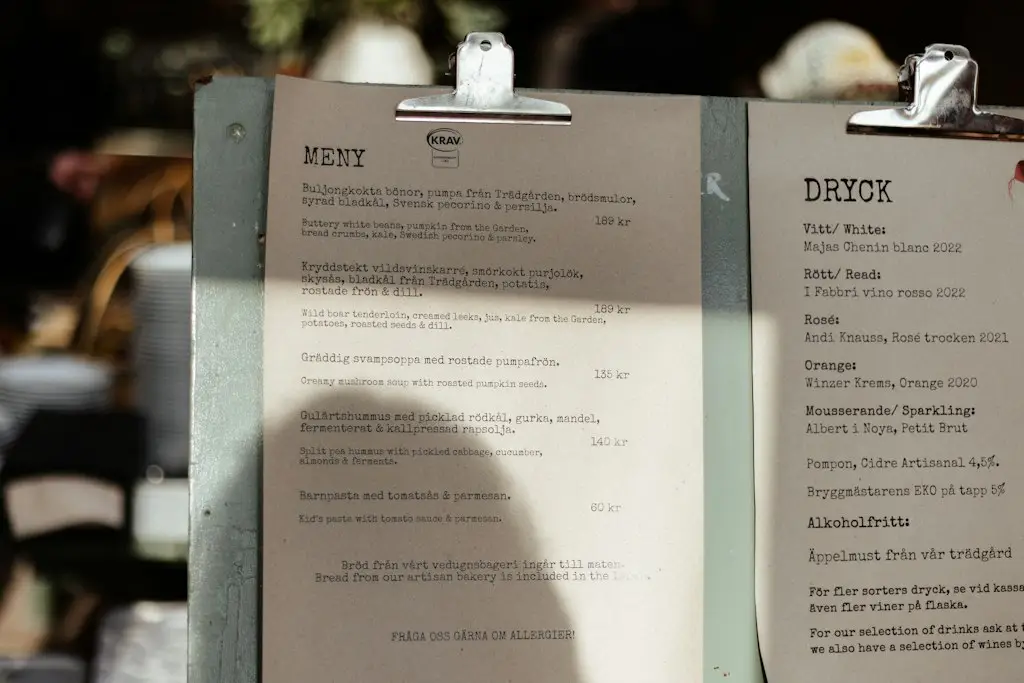
Digital menus make all of this faster. With QR ordering and digital dining menus, you can reorder a section, feature a Puzzle, or change a price without reprinting anything. Delivery listings deserve their own review, since the margin picture there changes once commission is deducted, which we explored in our post on delivery app integration.
Where the POS Does the Heavy Lifting
The reason many restaurants never run this analysis is not the maths. It is gathering the inputs. Accurate menu engineering needs three things that are painful to assemble by hand: sales counts per item for a defined period, a current ingredient cost for every recipe, and a way to separate channels and branches.
A POS with recipe-level stock management produces all three. Each dish carries its recipe, so the cost per plate updates as supplier prices change. Sales mix reports give the popularity figures. Modifiers such as extra cheese or a large portion are captured properly rather than lost. And for groups, a multi-branch POS lets you compare the same dish across locations, which often reveals that a Star in one branch is a Plowhorse in another because of portioning drift.
With that data in place, the analysis becomes a quarterly routine rather than a one-off project. Run it after any significant supplier price change as well, since a Star can slide into Plowhorse territory without anyone touching the menu.
MultiTech POS has spent more than 15 years supporting UAE restaurants, cafes and cloud kitchens with VAT-compliant billing, recipe costing and branch-level reporting. If you run a smaller format, the same approach applies through our coffee shop POS, where drinks and add-ons usually hide the biggest margin differences.
Find out which dishes really pay your rent
Book a demo and we will show you contribution margin and sales mix reports built from your own menu.
Frequently Asked Questions
1. What is restaurant menu engineering? It is a method of analysing every menu item by two measures, how often it sells and how much contribution margin it earns per plate. Items are grouped as Stars, Plowhorses, Puzzles or Dogs, and each group has a standard action. The aim is to raise overall profit without needing more guests.
2. How often should a UAE restaurant run a menu engineering review? Quarterly works well for most operators, with an extra review whenever a key ingredient changes price significantly or a new menu launches. Seasonal shifts such as Ramadan and the summer months can also change the sales mix enough to justify a separate look.
3. Should I include VAT when calculating margins? No. Menu prices in the UAE are shown inclusive of 5% VAT, and that tax belongs to the Federal Tax Authority. Divide the displayed price by 1.05 before subtracting food cost, otherwise every margin in the analysis is overstated.
4. Should I remove every Dog from the menu? Not automatically. Some low performers serve a purpose, such as a vegetarian option that keeps group bookings, or a children’s dish that brings families in. Keep those deliberately, but simplify them so they cost as little as possible to prepare and stock.
5. Can I do menu engineering without a POS? You can, using spreadsheets and manual sales counts, but it is slow and the numbers go stale quickly. A POS with recipe costing and sales mix reports keeps the inputs current automatically, which is what turns a one-time exercise into a regular habit.
